
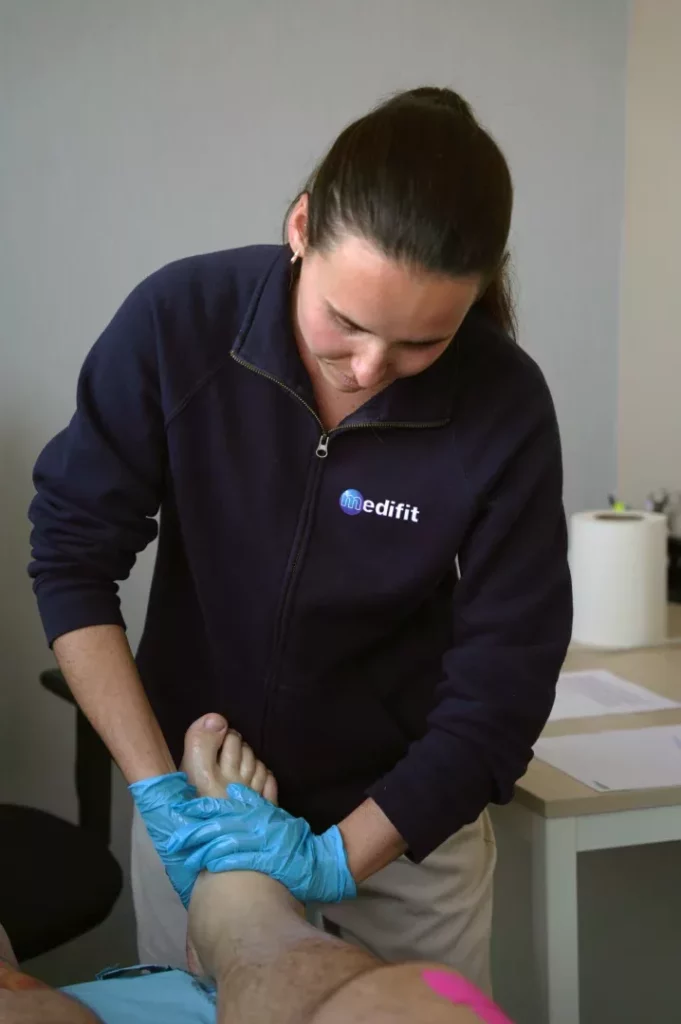
Lymphatic drainage is often associated with aesthetic treatments or wellness centers. However, its true value lies in the medical and rehabilitation field.
When well indicated, manual lymphatic drainage can play a relevant role in the management of edema, post-surgical swelling and lymphedema. When applied without prior clinical assessment, it can be ineffective or even delay appropriate treatment.
The difference is in the diagnosis.
What is lymphatic drainage and how does it work?
The lymphatic system is responsible for maintaining fluid balance in the tissues, assisting in the immune response and facilitating the elimination of metabolic wastes. Lymph circulates through a network of vessels and lymph nodes carrying proteins, cellular debris and components of the immune system.
When this system is overloaded or altered – due to surgery, trauma, inflammation or lack of mobility – fluid accumulates in the tissues. The patient may notice persistent swelling, a feeling of heaviness, tension or progressive changes compatible with lymphedema.
Manual lymphatic drainage is a specific therapeutic technique that stimulates the circulation of lymph through soft, slow and targeted movements according to the anatomy of the lymphatic system. It is not a deep massage nor does it seek to exert intense pressure. Its objective is to facilitate the redirection of lymph to areas where it can be properly drained.
As this is an intervention on a delicate physiological system, it requires specific training and clinical judgment.
In which cases is lymphatic drainage indicated?
Lymphatic drainage can be useful when swelling is related to an alteration or overload of the lymphatic system. It is frequent in post-surgical processes, especially after interventions involving the removal of lymph nodes, as well as in certain inflammatory or traumatological pathologies where edema hinders functional recovery.
In the conservative management of lymphedema, drainage is part of a structured protocol that usually includes compression, therapeutic exercise and patient education. It is rarely used as the sole measure, as long-term control depends on a comprehensive approach.
It is important to keep in mind that not all edema is of lymphatic origin. There are vascular, cardiac, renal or systemic causes that require another type of medical approach. Treating swelling without knowing its origin is not a safe strategy.
When urgent consultation is necessary
The sudden appearance of swelling in a single extremity, associated pain, changes in skin color or temperature, or a history of oncologic or vascular disease require a medical evaluation before applying any manual technique.
In some cases, lymphatic drainage may be part of the treatment. In others, it may be contraindicated.
The indication should always be based on an individualized clinical evaluation.
Why lymphatic drainage should not be used alone
In the field of medical rehabilitation, lymphatic drainage is integrated into a broader therapeutic plan. Reducing edema is important, but the key is to understand why it occurs.
Activation of the muscle pump through therapeutic exercise, improvement of joint mobility, application of compression when indicated and periodic clinical follow-up are determining factors in achieving sustainable results.
Relieving the symptom without addressing the cause usually offers temporary benefits.
The clinical approach at Medifit
At Medifit, lymphatic drainage is performed by physiotherapists with specific training and always within a framework of prior medical and functional assessment.
Each patient receives an individual evaluation that takes into account his or her diagnosis, history and current clinical situation. When lymphatic drainage is indicated, it is integrated into a personalized rehabilitation program with clear criteria for follow-up and evolution.
The goal is not only to reduce swelling, but to improve function, mobility and quality of life in the medium and long term.
A therapeutic tool that requires precision
Lymphatic drainage can be an effective tool when correctly indicated and applied with clinical criteria. It is not a universal treatment or a “detox” solution.
Its effectiveness depends on three factors: proper diagnosis, correct technique and integration into a coherent therapeutic plan.
In rehabilitation, precision must always precede intervention.
Recommended next step
If you have persistent swelling, a feeling of heaviness or doubts about whether lymphatic drainage is right for you, the first step is a professional assessment.
A structured clinical evaluation will help determine the source of the problem and define the safest and most effective treatment for your specific situation.
